
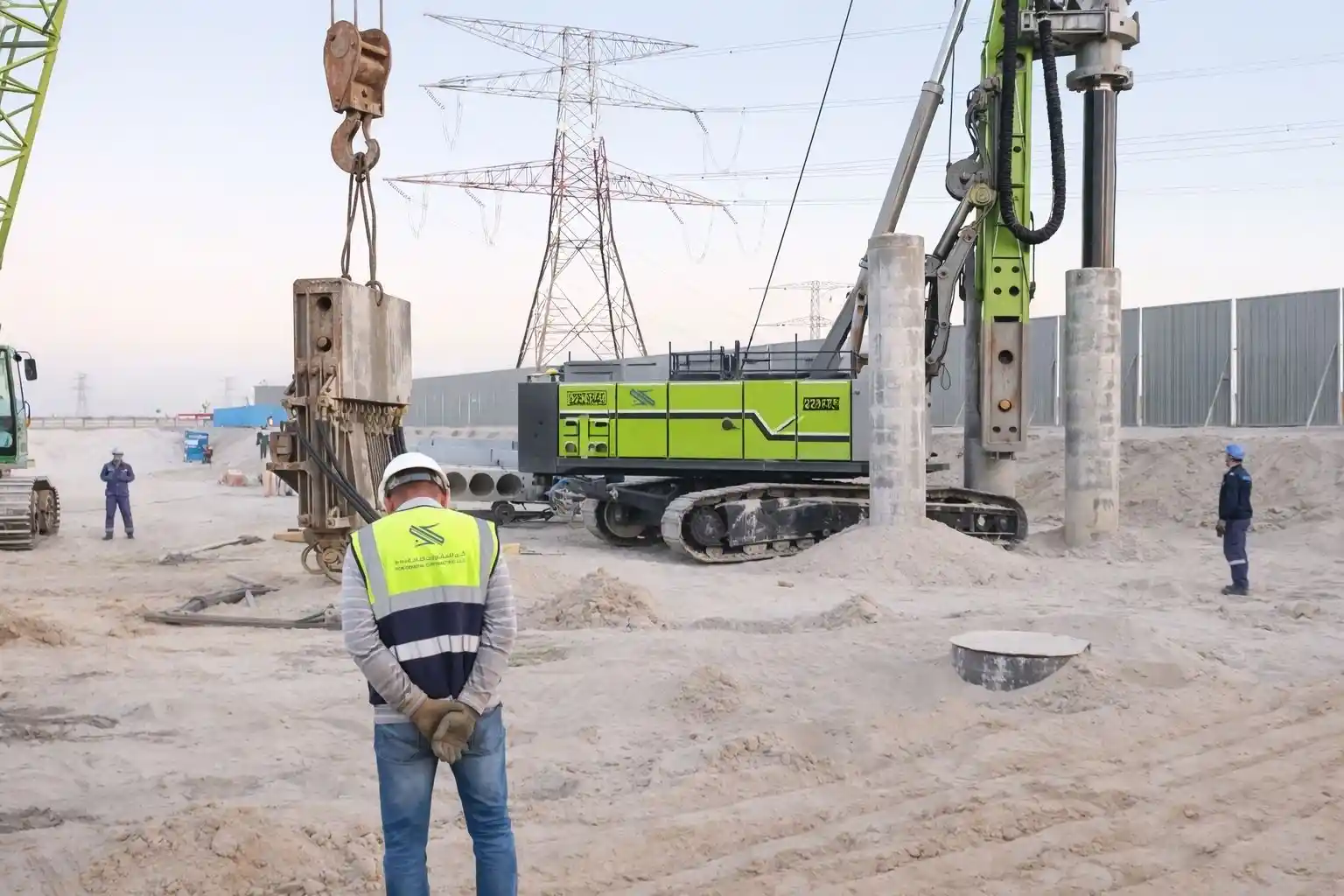
Bored piles are a type of deep foundation constructed by drilling a cylindrical hole into the ground and filling it with reinforced concrete. Unlike driven piles, bored piles are formed in situ, allowing greater flexibility in diameter, depth, and construction method. They are widely used in modern construction due to their ability to safely transfer structural loads to deeper, more competent soil or rock layers while minimizing noise and vibration.
Bored piles play a critical role in projects where surface soils are weak, structural loads are high, or construction is carried out in dense urban environments. Their performance depends heavily on proper execution, quality control, and understanding of ground conditions.
2. When Are Bored Piles Used?

Bored piles are picked when shallow foundations are not adequate to support structural loads. Common situations include:
- Presence of weak, loose, or compressible near surface soils
- High column or structural loads, big structurs
- Construction in urban or congested areas
- Projects located close to existing buildings or utilities
- Sites where noise and vibration must be minimized
They are commonly used for residential and commercial buildings, high rise structures, bridges, and industrial facilities.
3. Types of Bored Piles
The selection of bored pile type depends on soil conditions from the soil report, groundwater level, and project requirements.
Uncased Bored Piles
Used in stable soils where the bore can remain open without support. This method is suitable for stiff clays or rock formations with minimal groundwater influence.
Temporarily Cased Bored Piles
Temporary steel casing is installed to support the bore during drilling in loose soils or in the presence of groundwater. The casing is extracted during or after concreting.
Permanently Cased Bored Piles
Permanent casing remains in place as part of the pile structure. It may be used for structural reasons, durability, or where bore stability cannot otherwise be maintained.
Slurry-Supported Bored Piles
Bentonite or polymer slurry is used to support the bore walls in loose or water bearing soils. The slurry prevents collapse and groundwater inflow until concrete is placed.
4. Bored Pile Construction Method
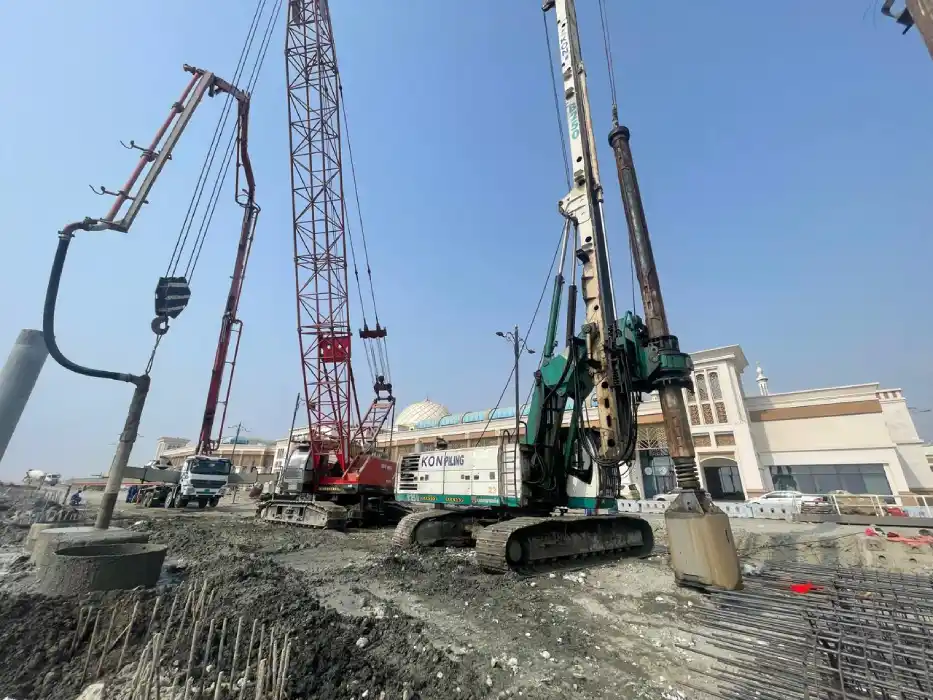
The construction of bored piles follows a controlled sequence to ensure performance and quality.
Setting Out and Position Control
Pile locations are set out accurately using survey control to ensure alignment with structural design.
Drilling and Boring Operations
Drilling is carried out using augers, buckets, or core barrels to the required depth and diameter.
Bore Stability and Groundwater Control
Depending on soil and groundwater conditions, temporary casing or slurry support is used to maintain bore stability.
Bore Cleaning and Base Preparation
The base of the bore is cleaned to remove loose material and ensure proper load transfer.
Reinforcement Cage Installation
The reinforcement cage is fabricated, inspected, and carefully lowered into the bore to the correct level.
Concrete Placement
Concrete is placed using the tremie method to ensure continuous flow from the base upward, preventing segregation and contamination.
Casing Extraction and Pile Head Finishing
Temporary casing is extracted while maintaining concrete level, and the pile head is prepared to the required cut-off level.
5. Equipment Used in Bored Piling
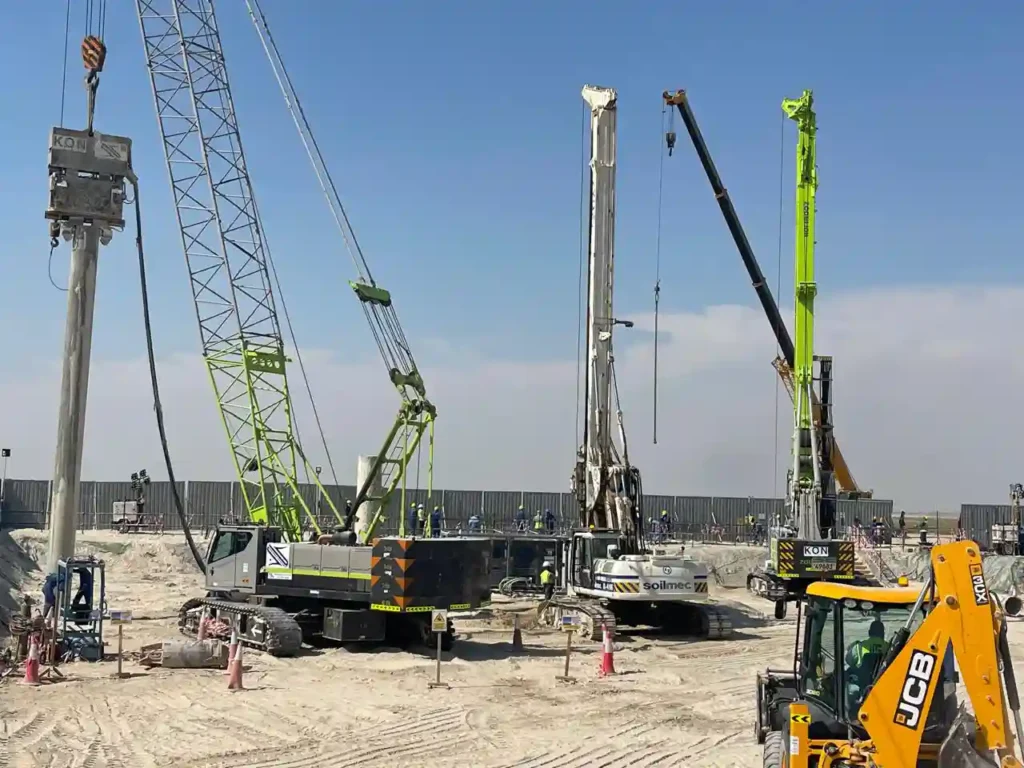
Typical equipment includes:
- Bored piling rigs
- Augers, drilling buckets, and core barrels
- Temporary casing and bentonite
- vibro
- Tremie pipes
- Cranes and supporting service equipment
The choice of equipment depends on pile size, depth, and ground conditions.
6. Soil and Ground Conditions
A thorough geotechnical investigation is essential for bored pile design and execution. Soil stratification, strength, and groundwater conditions directly influence pile type, depth, and construction method. Measures such as casing or slurry support are selected to maintain bore stability and ensure quality.
7. Structural Design Considerations
Bored piles transfer load through a combination of skin friction and end bearing. Key considerations include:
- Selection of pile diameter and length
- Reinforcement cage design
- Concrete cover and durability requirements
- Structural behavior under axial and lateral loads
8. Concrete Works in Bored Piles
Concrete quality is critical to pile performance. Requirements include:
- Suitable mix design with adequate workability
- Continuous tremie concreting
- Control of concrete level during placement
- Prevention of segregation and contamination
9. Quality Control and Assurance in Bored Piles
Quality control is an integral part of bored pile construction and includes:
- Verification of pile position, verticality, and depth
- Inspection of bore cleanliness and stability
- Reinforcement cage inspection and alignment checks
- Concrete testing, monitoring, and record keeping
Effective quality assurance ensures that piles perform as designed and meet project specifications.
10. Testing and Verification of Bored Piles
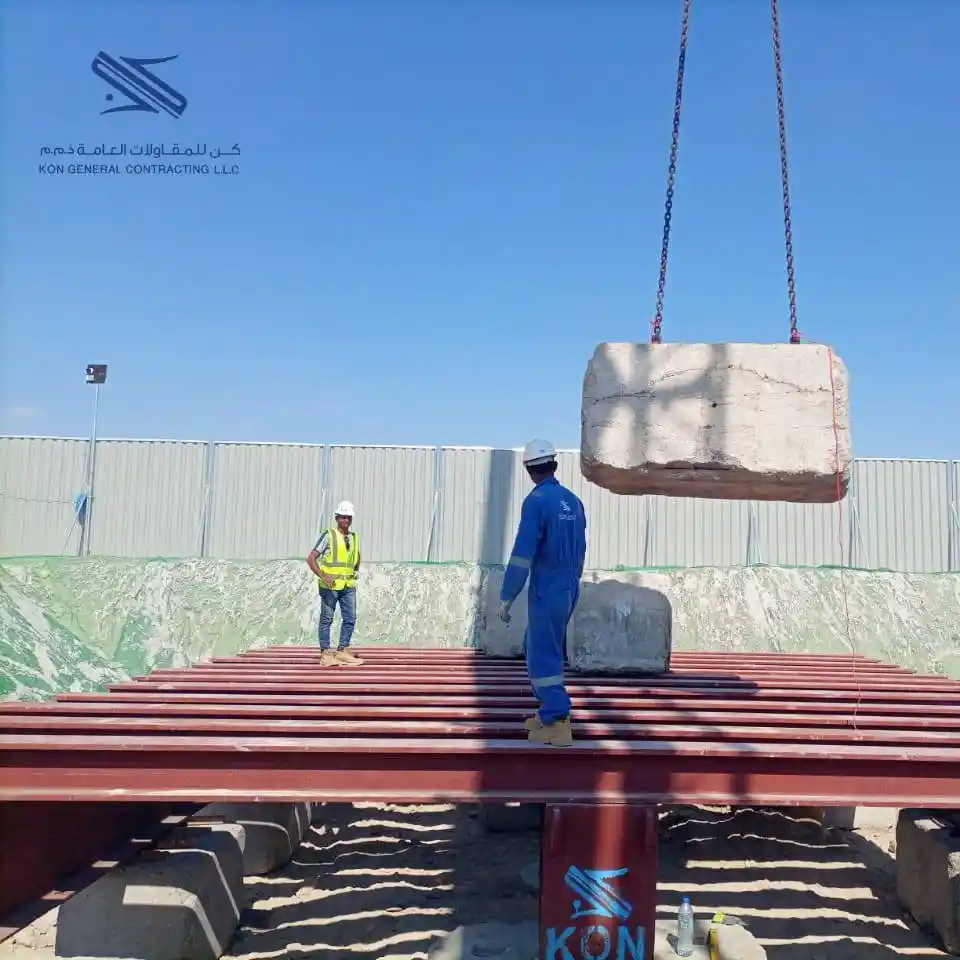
Testing is carried out to confirm pile capacity and integrity. Common methods include:
- Static load testing
- Dynamic load testing (where applicable)
- Pile integrity testing
Testing results provide confidence in foundation performance and compliance with design requirements.
11. Common Construction Challenges and Mitigation Measures
Typical challenges include:
- Bore collapse in unstable soils
- Necking or reduction in pile diameter
- Concrete contamination
- Reinforcement cage displacement
These risks are managed through proper planning, experienced supervision, and strict quality control.
12. Applications of Bored Piles
Bored piles are widely used in:
- Residential and commercial buildings
- High-rise structures
- Bridges and infrastructure projects
- Industrial and heavy-load facilities
13. Advantages and Limitations of Bored Piles
Advantages
- High load carrying capacity
- Low noise and vibration during construction
- Flexibility in pile diameter and depth
- Suitable for urban and sensitive sites
Limitations
- Sensitive to construction quality
- Challenges in high groundwater conditions
- Requires experienced execution and supervision
14. Regional Practice and Project Considerations
In many regions, bored piles are preferred for urban development’s due to limited vibration and adaptability to varying soil conditions. Compliance with local standards and project specifications is essential.
Conclusion
Bored piles remain a reliable and widely used deep foundation solution for modern construction projects. When properly designed, executed, and quality-controlled, they provide safe load transfer and long-term performance. Their versatility and suitability for complex ground conditions make them a key element in foundation engineering.
Bored Pile Foundation Construction Services
If you require bored pile foundation construction for your project, KON General Contracting provides comprehensive piling and foundation solutions supported by experienced teams, modern equipment, and strict quality assurance procedures.
For project specific requirements, you can contact KON General Contracting or request a quote tailored to your project scope. To see how we deliver foundation solutions across different projects, you can explore our portfolio and review our completed works.
Our team is ready to support your project from planning through execution with reliable and professionally managed bored pile construction services.