
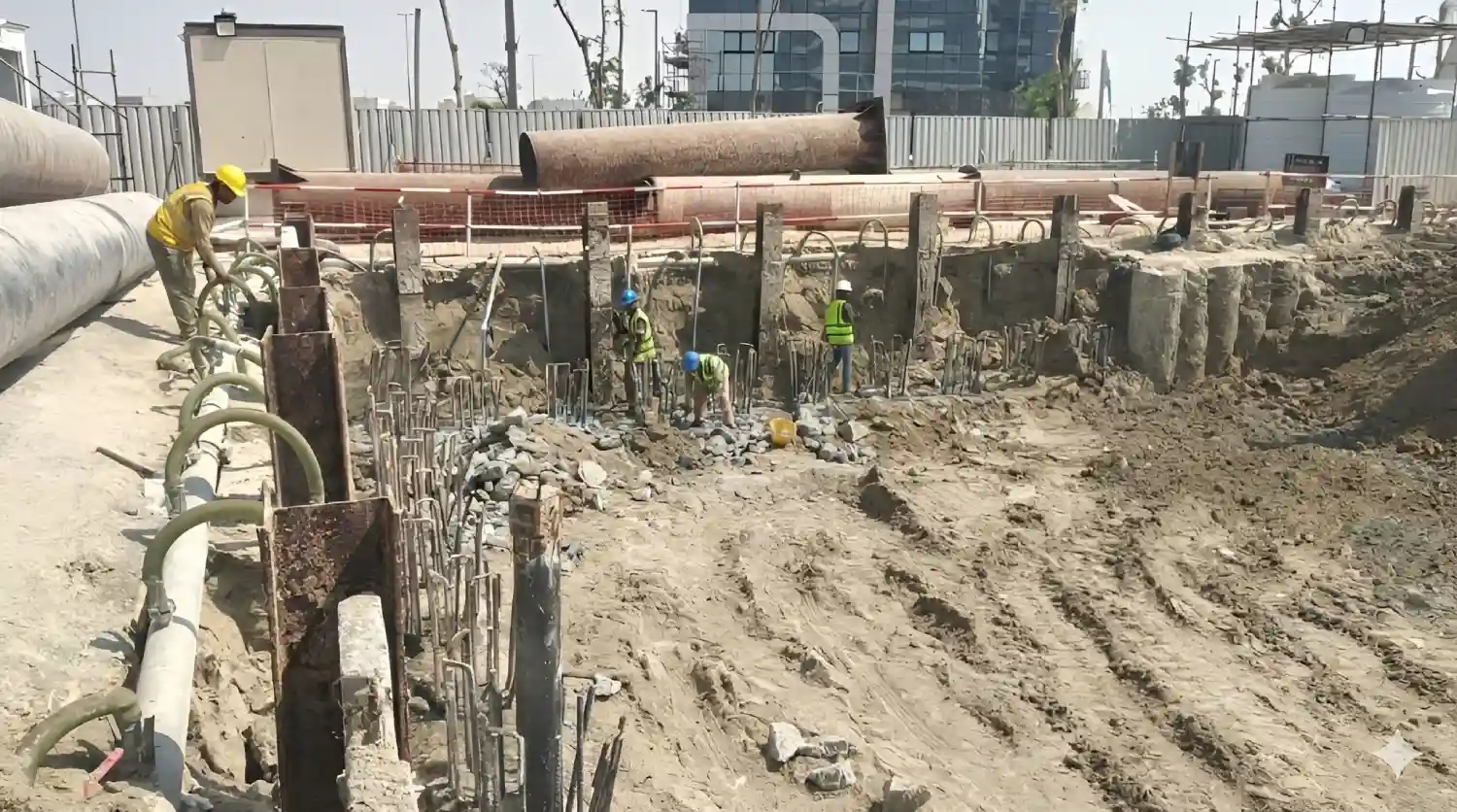
Introduction to Construction Dewatering
Dewatering in construction is a critical process used to control groundwater and surface water during excavation and foundation works. In real construction projects, dewatering is not just a theoretical requirement, it directly affects safety, quality, productivity, and cost. Poor groundwater control can lead to excavation collapse, foundation defects, delays… and rework.
in this guide we try to explain construction dewatering: types, methods, best practices so it would help you in your deep foundation construction project or work or even study, we hope it becomes a practical reference for contractors, engineers, and project teams involved in foundations, piling, basements, and deep excavations.
What Is Dewatering in construction?
Dewatering Meaning in Construction
Dewatering in construction is the process of lowering or controlling groundwater levels to create dry and stable conditions for excavation and foundation activities. The objective is to reduce water pressure in the soil, improve stability, and allow construction works to proceed safely below the natural groundwater table.
Dewatering is commonly required for:
- Foundation construction
- Bored pile and CFA piling works
- Basement excavations
- Underground structures
- Infrastructure and utility projects
Why Dewatering Is Essential on Site
From real project experience, uncontrolled groundwater is one of the most common causes of construction problems. Without proper dewatering, projects face many hazards like :
Risks of Skipping Dewatering on Construction?
- Excavation side collapse
- Bore instability during piling
- Concrete contamination
- Reduced bearing capacity
- Delays and increased construction costs
- Site Stability and safety
Effective construction dewatering protects both the structure and the construction sequence.
Main Construction Dewatering Methods
1. Wellpoint Dewatering System
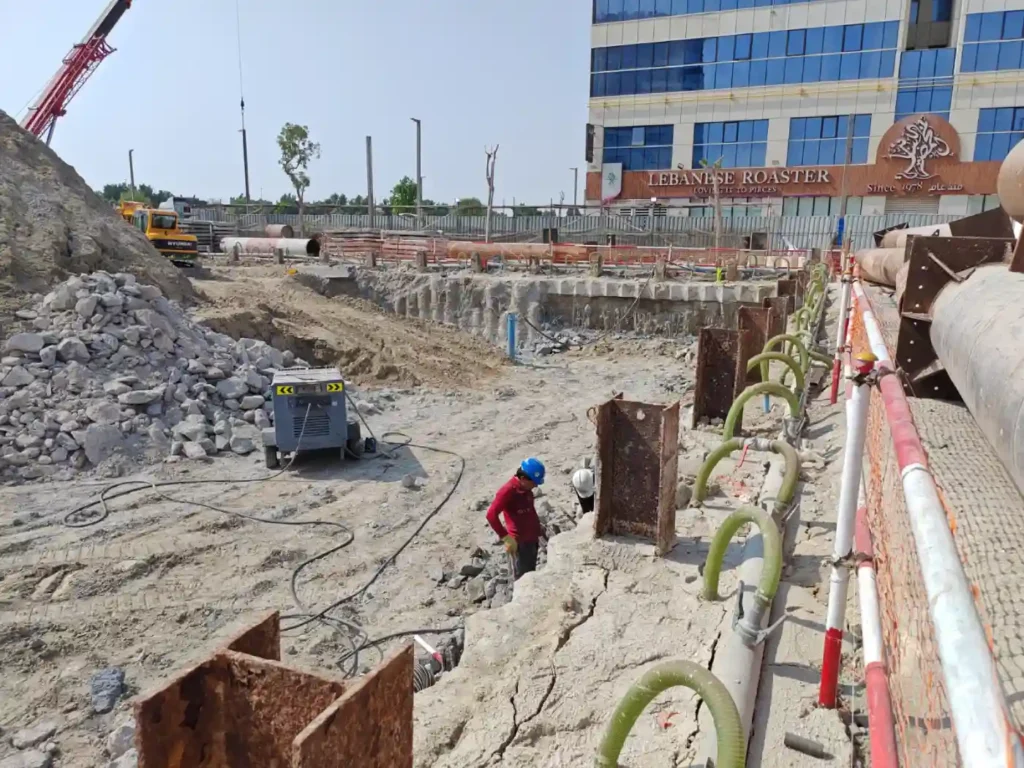
The wellpoint system is one of the most widely used construction dewatering methods for shallow to medium depth excavations.
How it works: A series of small diameter wells are installed around the excavation and connected to a header pipe and pump. The system lowers the groundwater table evenly across the site.
Best applications:
- Sandy and silty soils
- Excavations up to 6–7 meters (single-stage)
- Foundation and piling platforms
Site best practice: Continuous pump operation and leak free connections are critical to system efficiency.
2. Deep Well Dewatering
Deep well dewatering is used for large or deep excavations where higher drawdown is required.
How it works: Large diameter boreholes with submersible pumps extract groundwater from deeper aquifers.
Best applications:
- Deep basements
- Large foundation footprints
- High groundwater inflow conditions
Real world observations: Deep well systems must be carefully designed and monitored to avoid excessive withdrawal and subsidence of adjacent structures.
3. Sump Pumping
Sump pumping is a basic dewatering method where water is collected in low points and pumped out.
Limitations:
- Not suitable for fine or unstable soils
- Can cause erosion if not controlled
Best use: As a temporary or supplementary solution rather than a primary dewatering method.
4. Eductor (Jet Pump) Dewatering System
Eductor systems are used where soil permeability is too low for traditional pumping methods.
Best applications:
- Silty and clayey soils
- Sites requiring deeper drawdown with controlled flow
some Site consideration: These systems require skilled operation and higher energy input but perform well in difficult ground conditions.
5. Combined Dewatering and Cutoff Systems
In complex projects, dewatering is combined with physical barriers such as:
- Sheet piles
- Secant pile walls
- Diaphragm walls
These systems reduce groundwater inflow and improve overall dewatering efficiency.
How to Choose the Right Dewatering Method
Selecting the most effective dewatering system starts with a clear understanding of site conditions and disciplined execution. While factors such as soil characteristics, groundwater volume, and excavation depth guide the technical choice, successful dewatering ultimately depends on proper planning, correct equipment selection, and continuous control during construction.
Working with an experienced dewatering contractor helps ensure that the selected system is suited to the actual site conditions rather than generic assumptions. The following practices are essential for achieving reliable results:
Conduct Site Investigations
Before dewatering works begin, detailed geotechnical and groundwater investigations should be carried out. These studies identify soil layers, groundwater levels, and expected water inflow rates. For instance, permeable sandy soils often respond well to wellpoint systems, while low-permeability clay layers may require eductor or combined solutions. Skipping this step increases the risk of selecting an unsuitable system, which can lead to instability, delays, and additional costs.
Comply with Environmental and Site Regulations
Dewatering activities must follow local environmental and site regulations to prevent negative impacts on surrounding water bodies and groundwater resources. Discharged water may require treatment, filtration, or testing before release. In many projects, limits are also placed on discharge rates and locations. Compliance is not only a legal requirement but a key part of responsible construction practice.
Select Pumps Based on Actual Site Demand
Pump selection plays a major role in dewatering performance. Submersible pumps are typically used for deep well systems, while wellpoint installations rely on vacuum pumps. The selected pump capacity should match the expected groundwater inflow. Undersized pumps may fail to control water levels, while oversized pumps can increase costs and cause unnecessary drawdown.
Monitor and Maintain the System Throughout Construction
Once dewatering is operational, continuous monitoring is essential. Pumps, pipelines, and wells should be checked regularly for blockages, leaks, or mechanical issues. Preventive maintenance reduces the risk of sudden failures that could flood excavations, disrupt foundation works, or compromise site safety.
Why Proper Dewatering Matters
Effective construction dewatering plays a key role in keeping excavation and foundation works safe, controlled, and productive. When groundwater is not properly managed, sites can face soil movement, water ingress, and disruptions that quickly impact schedules and project costs.
A range of dewatering methods such as deep wells, wellpoint systems, and bypass arrangements can be selected and adjusted to suit specific ground conditions and excavation requirements. Gaining the right technical understanding and applying proven dewatering solutions on site is essential for achieving stable working conditions and consistent construction progress.
Dewatering for Foundations and Piling Works
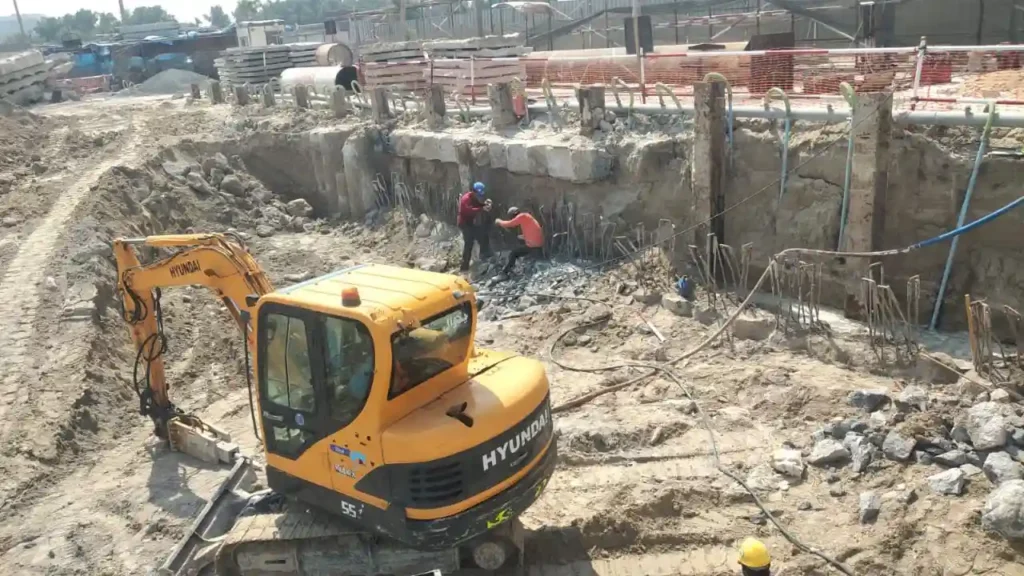
Dewatering for Bored Piles
In bored pile construction, groundwater control is essential to:
- Prevent bore collapse
- Maintain drilling stability
- Ensure clean pile base before concreting
Dewatering is often coordinated with temporary casing or drilling fluids based on site conditions.
Dewatering for CFA Piles
CFA piling generally tolerates groundwater better than bored piles, but excessive water can still affect concrete quality and pile integrity.
Dewatering Design Considerations
Effective construction dewatering design depends on:
- Soil layers and permeability
- Groundwater level and recharge rate
- Excavation depth and geometry
- Nearby structures and services
- Discharge and environmental requirements
Site investigation and pump testing are essential before finalizing the dewatering system.
Quality Control and Monitoring
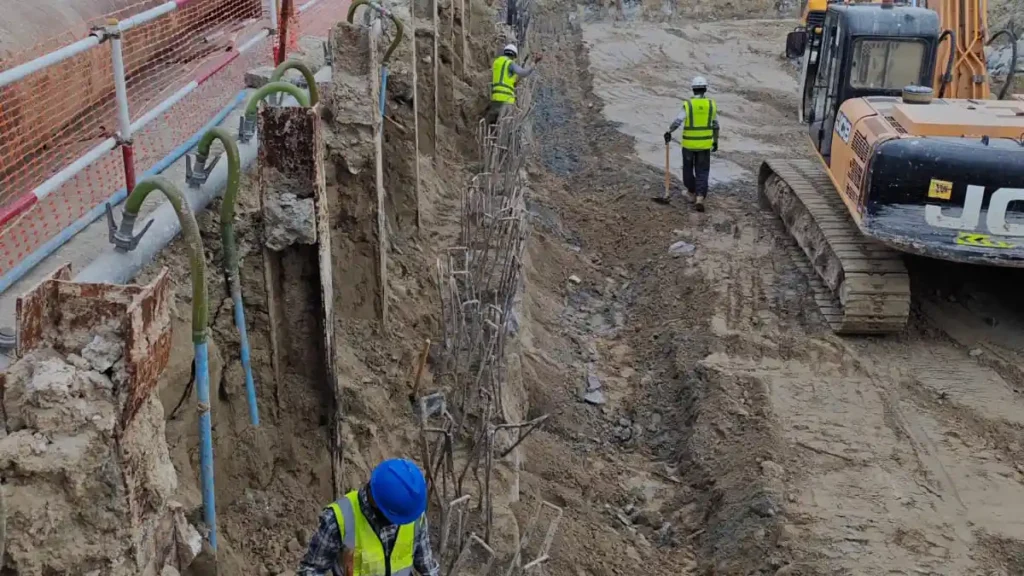
Best practices for construction dewatering include:
- Continuous groundwater level monitoring
- Regular pump performance checks
- Settlement monitoring near adjacent structures
- Backup pumps and power supply
Most dewatering failures occur due to poor monitoring rather than poor design.
Common Dewatering Issues on Construction Sites
- Pump clogging caused by fine particles
- Excessive drawdown leading to settlement
- Inadequate well spacing
- Power interruptions
Proper planning and supervision significantly reduce these risks.
Environmental and Site Regulations
Construction dewatering must comply with local regulations related to:
- Discharge water quality
- Sediment control
- Approved disposal locations
Managing discharge correctly prevents regulatory issues and project delays.
Best Practices for dewatring
- Start dewatering before excavation begins
- Maintain stable pumping rates
- Adjust systems as excavation progresses
- Coordinate dewatering with foundation sequencing
Practical execution and site awareness are as important as design calculations.
Construction dewatering is a fundamental part of successful excavation and foundation works. When the correct dewatering method is selected and properly managed, it ensures safety, structural quality, and smooth project execution.
For professional construction dewatering and integrated foundation solutions, KON General Contracting provides proven expertise backed by real project experience. If your project requires reliable groundwater control, contact KON General Contracting, request a quote, or explore our portfolio to see our work across Abu Dhabi.
frequently asked questions
Construction dewatering is the process of controlling or lowering groundwater levels to create dry and stable conditions for excavation, foundation, and piling works. It allows construction activities to be carried out safely below the natural groundwater table.
Wellpoint systems consist of a network of shallow wells linked to a header pipe, where a vacuum pump extracts groundwater, making them suitable for sandy soils and shallow excavation areas.
Dewatering is needed on construction sites to control groundwater levels, maintain soil stability, and create dry conditions for excavation, foundation, and piling works. Proper dewatering helps prevent excavation collapse, water ingress, and delays during construction.
The most commonly used construction dewatering methods include wellpoint systems, deep well pumping, sump pumping, and eductor systems. The selection depends on soil type, excavation depth, and groundwater conditions.
Soil permeability plays a major role in dewatering design. Sandy and silty soils are well suited for wellpoint systems, while low-permeability soils such as clay may require eductor systems or combined cutoff solutions.
Yes, excessive or uncontrolled dewatering can lead to ground settlement, especially in compressible soils. Proper design, controlled pumping rates, and continuous monitoring help reduce this risk.
For deep excavations, deep well systems are most effective. Submersible pumps in drilled wells remove large volumes of water and maintain stable conditions.
Without dewatering, groundwater can cause soil collapse, flooding, and unsafe conditions, delay construction and affecting foundation quality.
The duration of dewatering depends on groundwater levels, soil type, and excavation depth. Shallow sites may take a few days, while deep or complex excavations can require several weeks of continuous pumping.
In many cases, yes. Dewatering helps maintain bore stability, prevents collapse, and ensures a clean pile base before concreting. Dewatering is often combined with temporary casing or drilling fluids depending on site conditions.
For professional dewatering expertise contractors in Abu Dhabi, KON General Contracting provides experienced teams and proven solutions. They handle site assessments, system design, and execution to ensure safe and effective groundwater control for foundations, excavations, and piling works.
Dewatering is monitored through groundwater level measurements, pump performance checks, and settlement monitoring around adjacent structures. Regular inspections help ensure the system remains effective throughout construction.