
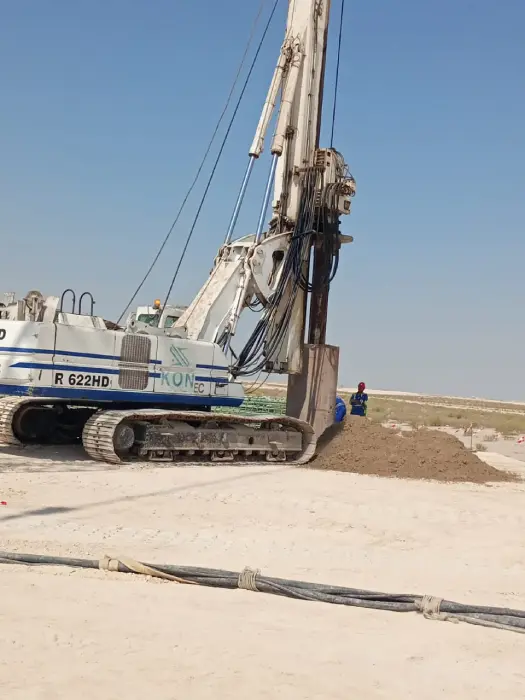
In modern construction, deep foundations are essential for transferring structural loads safely to competent soil or rock layers. The execution of these foundations relies heavily on piling machines, the one responsible and designed to install piles with precision, consistency, and engineering control. Selecting the correct piling machine is a critical technical decision that directly affects pile integrity, bearing capacity, settlement behavior, and overall project performance.
This article provides a technical overview of the piling rigs used in modern construction, their classifications, operating principles, and real-world applications reflecting the professional standards applied by leading foundation specialists like KON General Contracting LLC.
Understanding the Role of Piling Machines
Piling machines are specialized construction rigs used to install piles through drilling, driving, vibrating, or pressing methods. These machines ensure accurate pile alignment, controlled penetration depth, and compliance with design specifications.
In challenging ground conditions such as loose sands, soft clays, or high groundwater levels, advanced piling machines are required to maintain bore stability, prevent collapse, and achieve the required load capacity.
1. Rotary Drilling Piling Machines
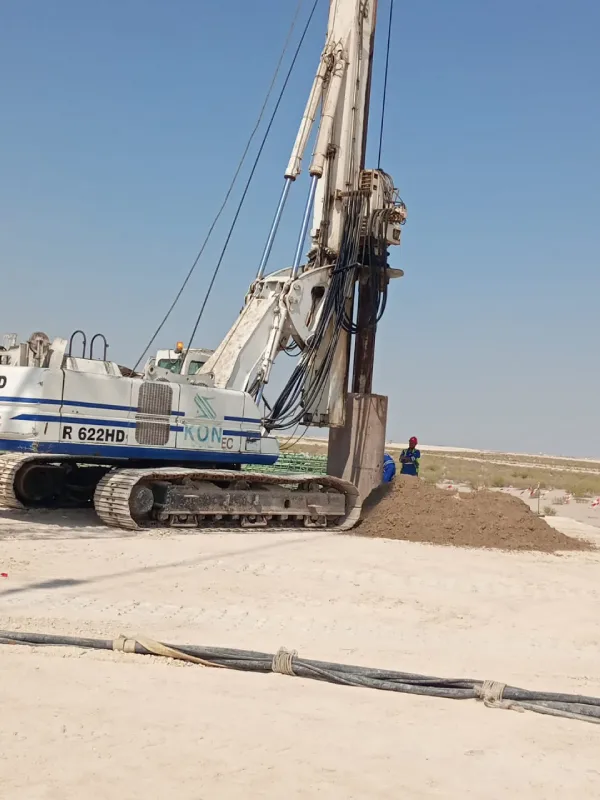
Rotary drilling piling Rigs are widely used for bored pile construction and piling works in the UAE. They utilize high torque and downward force to drill through soil and rock formations using various tools such as augers, buckets, and core barrels.
Typical applications:
- Large-diameter bored piles
- High-rise buildings
- Infrastructure and bridge foundations
Technical advantages:
- High drilling torque for hard strata
- Precise depth control
- Compatibility with casing systems
- Suitable for piles exceeding 40 m depth
Rotary piling machines are often combined with temporary or permanent casing to stabilize boreholes in unstable or water-bearing soils.
2. Continuous Flight Auger (CFA) Piling Machines
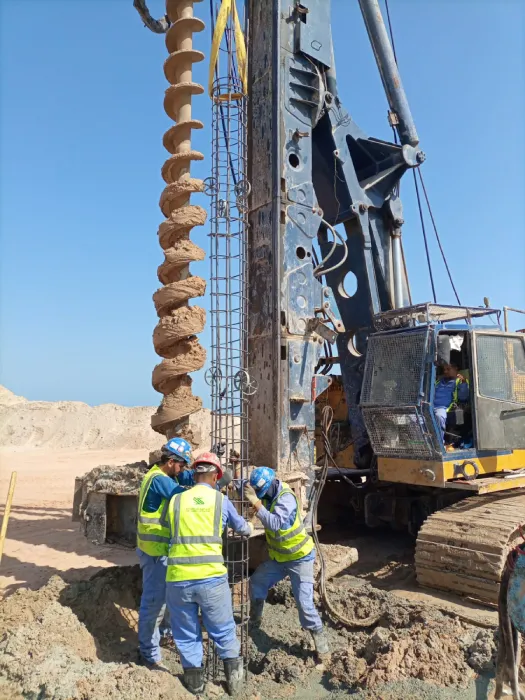
CFA piling machines install piles by drilling with a continuous auger while concrete is pumped through the hollow stem during extraction. This method minimizes soil relaxation and groundwater ingress.
Typical applications:
- Urban construction sites
- Medium-load structures
- Areas with vibration restrictions
Technical advantages:
- Reduced noise and vibration
- Continuous pile formation
- Controlled concrete placement
- High productivity rates
CFA piling machines are ideal where adjacent structures must be protected from settlement or vibration-induced damage.
3. Hydraulic Driven Piling Rigs
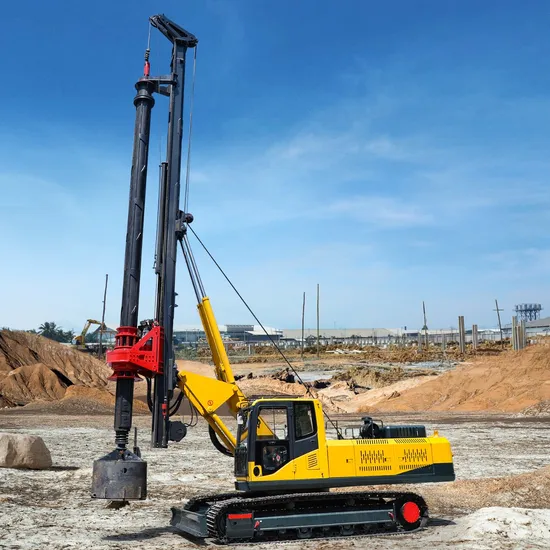
Hydraulic piling machines are used to drive steel or precast concrete piles using controlled hydraulic energy. These machines offer improved efficiency and reduced environmental impact compared to traditional impact systems.
Typical applications:
- Industrial facilities
- Infrastructure projects
- Heavy load-bearing foundations
Technical advantages:
- Precise energy control
- Reduced pile damage
- Lower noise levels
- Consistent driving performance
Hydraulic systems allow better monitoring of driving resistance, which is essential for pile integrity verification.
4. Vibro Piling Machines
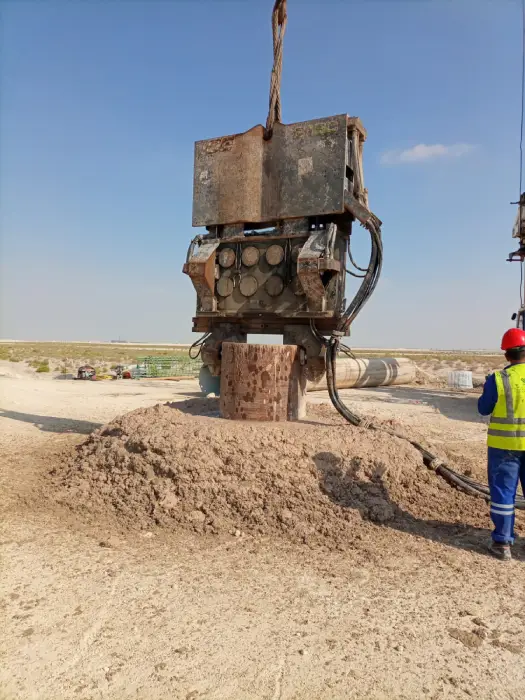
Vibro piling machines use vertical vibration to reduce soil resistance in ground improvement solutions, allowing piles or casings to penetrate under their own weight or applied force.
Typical applications:
- Sheet pile installation
- Temporary and permanent retaining structures
- Marine and waterfront projects
Technical advantages:
- Fast installation rates
- Effective in granular soils
- Reduced structural stress
- Efficient extraction capability
Vibro piling machines are frequently used in projects requiring temporary works or rapid installation cycles.
5. Impact Hammer Piling Rigs
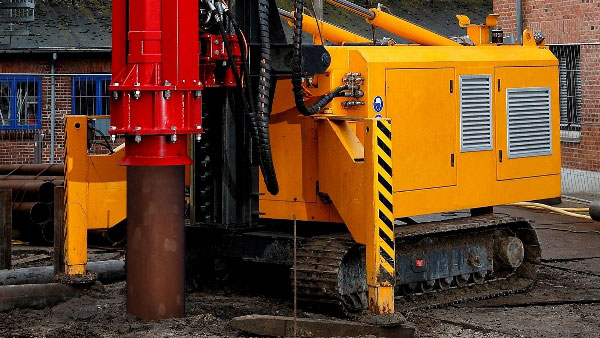
Impact piling machines install piles using repeated hammer blows generated mechanically, hydraulically, or diesel-powered. Despite advancements in quieter methods, impact hammers remain essential for specific applications.
Typical applications:
- Offshore and marine works
- Dense soil and rock conditions
- Large-diameter steel piles
Technical advantages:
- High penetration capability
- Suitable for very dense strata
- Proven performance in heavy civil works
Proper monitoring is essential to control stresses and ensure pile integrity during driving operations.
6. Micro Piling Rigs
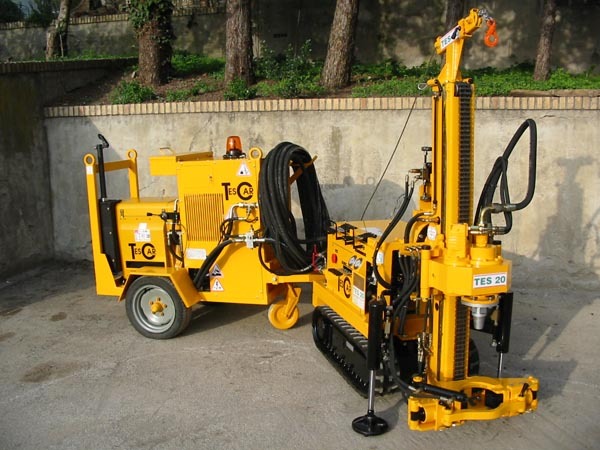
Micro piling machines are compact rigs designed for small-diameter piles, typically ranging from 150 mm to 300 mm. These machines operate efficiently in restricted access and low-headroom conditions.
Typical applications:
- Underpinning
- Structural strengthening
- Rehabilitation and retrofit projects
Technical advantages:
- Compact footprint
- Minimal vibration
- High load capacity relative to size
- Adaptable drilling techniques
Micro piling machines are commonly used where conventional piling rigs cannot operate.
7. Casing Oscillators and Rotators
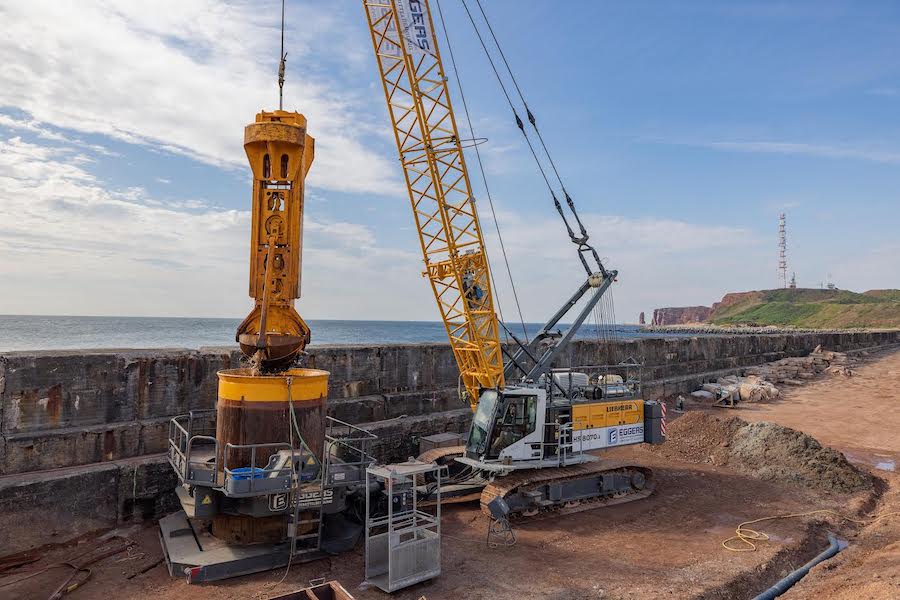
Casing systems are critical piling machines used in conjunction with rotary rigs to stabilize boreholes during drilling in loose or saturated soils.
Typical applications:
- Deep bored piles
- High groundwater conditions
- Coastal and reclaimed land projects
Technical advantages:
- Borehole stability
- Improved pile quality
- Enhanced safety
- Increased drilling depth capability
These machines ensure precise vertical alignment and prevent soil collapse during excavation.
8. Crane-Mounted Piling Systems
Crawler cranes equipped with piling attachments offer flexibility for large foundation projects.
Typical applications:
- Large infrastructure developments
- Open construction sites
- Multi-method piling works
Technical advantages:
- High lifting capacity
- Adaptability
- Wide operational reach
Crane-mounted piling machines are effective where site space allows unrestricted movement.
Quality Control and Monitoring in Piling Operations
Modern piling machines are integrated with monitoring systems that record:
- Drilling depth
- Torque and pressure
- Concrete volume
- Penetration rates
This data supports quality assurance, pile verification, and compliance with design and specification requirements.
Selecting the Right Piling Machine
The selection of piling machines depends on:
- Soil stratigraphy
- Load requirements
- Environmental constraints
- Site access
- Project timeline
At KON experienced foundation contractor in Abu Dhabi, piling machines are selected based on detailed geotechnical data, load calculations, and structural requirements. Each piling system is matched to soil stratigraphy, groundwater conditions, and design tolerances to ensure long-term foundation performance.
Professional contractors evaluate these parameters to ensure optimal performance and long-term foundation reliability.
Piling machines are the backbone of deep foundation engineering. Each type, rotary, CFA, vibro, driven, or micro piling serves a specific technical purpose based on ground conditions and structural demands.
By understanding the types, uses, and applications of piling machines, project stakeholders and engineers can make informed decisions that lead to safer construction, improved performance, and durable foundations. This level of technical understanding reflects the professionalism and engineering standards expected from leading foundation specialists in the UAE.
you can contact our engineering team for any foundation projects you have.