
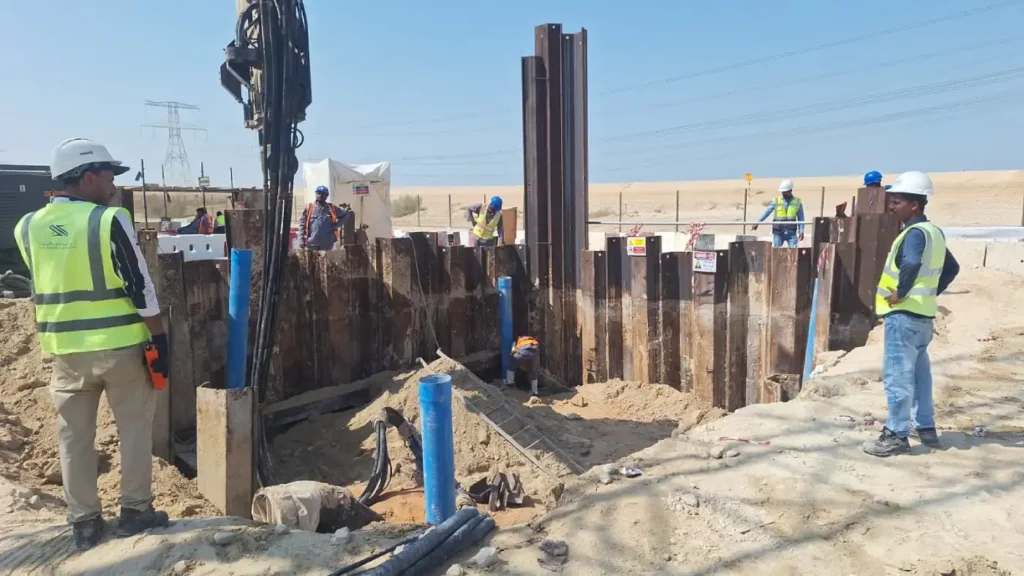
sheet piling & shoring is a Lateral support system they are essential techniques in modern construction, especially when working with excavations, basements, waterfronts, or unstable soil conditions. Whether you’re building a high-rise, installing utilities, or developing infrastructure, understanding how these systems work helps ensure safety, efficiency, and long-term performance.
This guide explains sheet piling and shoring in a clear, practical way covering methods, applications, and real-world considerations on site.
What Is Sheet Piling?
Sheet piling is a type of Retaining systems for excavation made from interlocking steel sheets driven into the ground to form a continuous wall.
These sheets create a barrier that holds back soil and in many cases controls groundwater.
Key Features:
- Interlocking edges form a tight wall
- Installed by driving or vibrating into the ground
- Can act as both temporary and permanent support
Common Uses:
- Excavation support
- Basement construction
- Marine and waterfront structures
- Flood protection systems
Sheet piles are especially useful when a continuous barrier is needed to prevent soil movement and water ingress.
What Is Shoring?
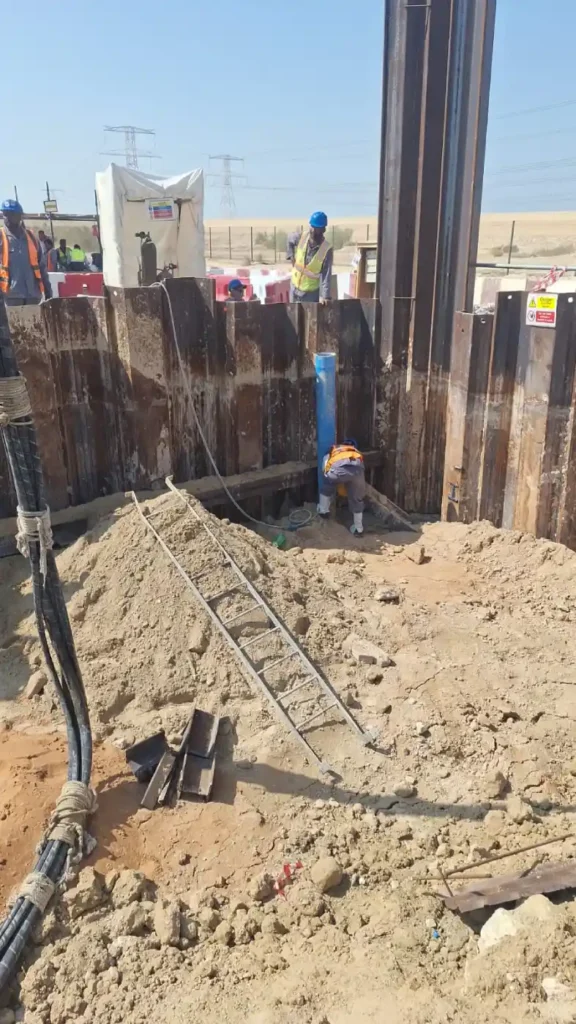
Shoring refers to a broader category of temporary support systems used to stabilize excavation sides and protect surrounding structures. Unlike sheet piling (which is a specific method), shoring includes multiple techniques depending on site conditions.
Common Shoring Systems:
- Sheet pile shoring
- Soldier pile and lagging
- Secant pile walls
- Diaphragm walls
- Bracing and strutting systems
Shoring systems are designed to prevent collapse, control soil movement, and ensure safe working conditions during excavation.
Sheet Piling vs Shoring: What’s the Difference?
It’s common to hear these terms used together, but they are not the same.
- Sheet piling is a specific method using steel sheets
- Shoring is the overall concept of supporting excavations
In many projects, sheet piling is used as part of a shoring system.
sheet piling is a part or a one way of doing shoring
we will talk later about the other ways of shoring
When Are Sheet Piling & Shoring Required?
These systems are typically required when:
- Excavations are deep
- Soil is loose or unstable
- Groundwater is present
- Construction is close to existing structures
- There is a risk of soil collapse
Without proper support, excavation can become dangerous and lead to structural damage, delays, or costly failures.
Types of Sheet Piling Systems
1. Cantilever Sheet Piles
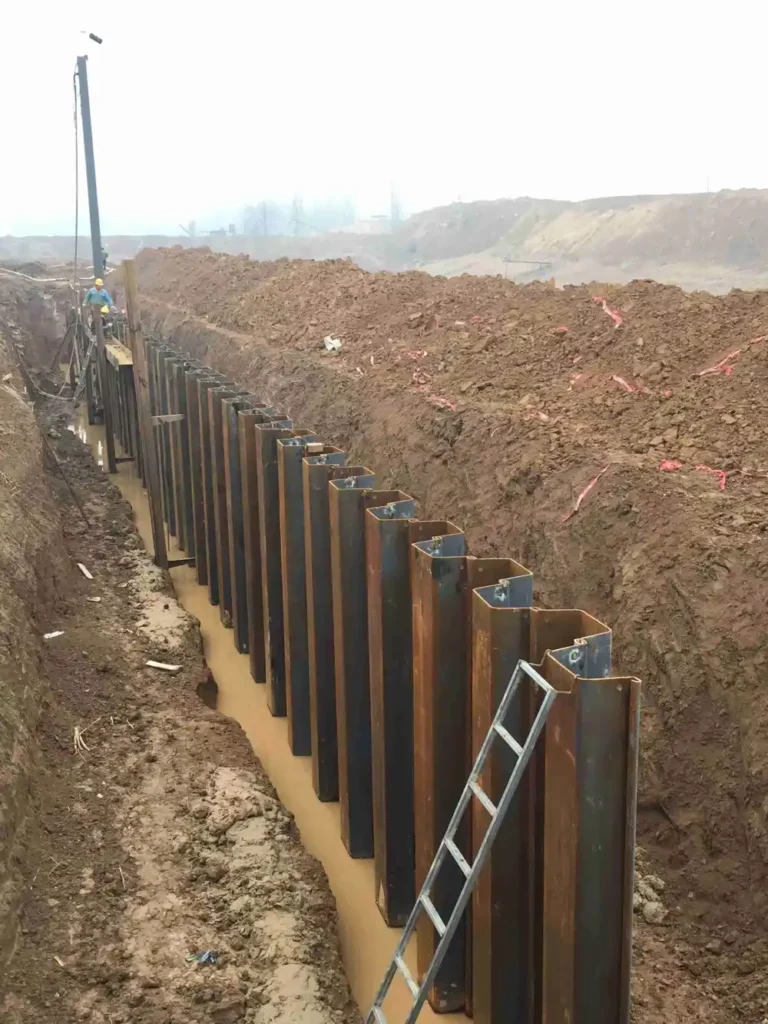
These rely on the embedded depth of the sheet pile for stability and are used for relatively shallow excavations.
2. Anchored Sheet Piles
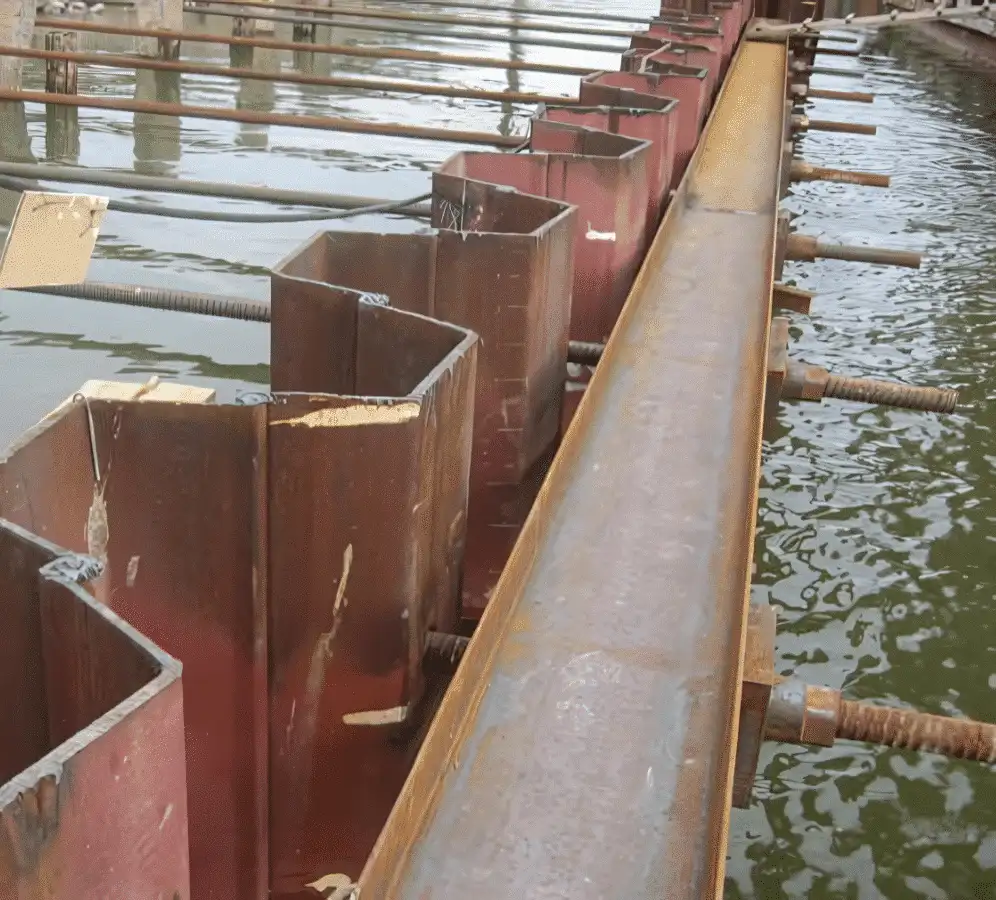
Tie rods or anchors are used to provide additional support, making them suitable for deeper excavations.
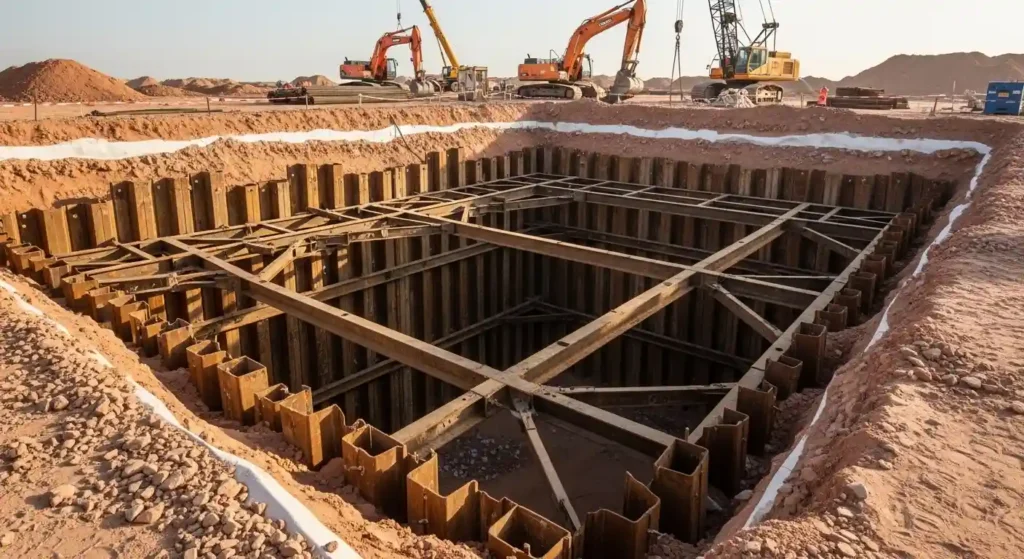
3. Braced Sheet Piles
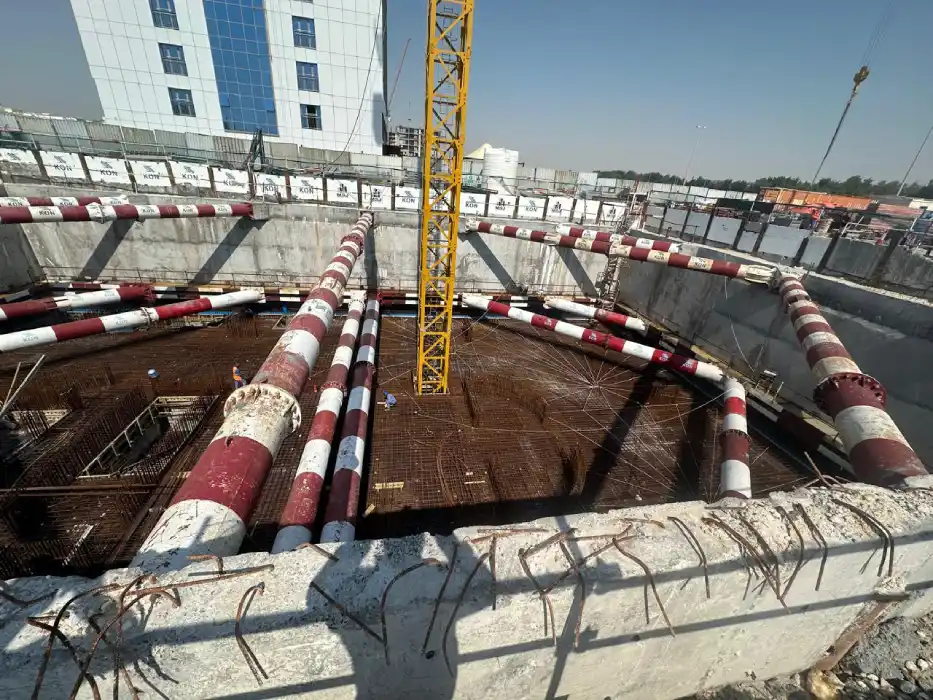
Internal supports (struts) are installed across the excavation to hold the sheet piles in place.
Each type is selected based on excavation depth, soil conditions, and space constraints.
Key Components of Shoring Systems
A complete shoring system often includes:
- Retaining walls (sheet piles, secant piles, etc.)
- Bracing systems (struts or anchors)
- Waling beams (to distribute loads)
- Dewatering systems (to control groundwater)
These components work together to maintain excavation stability.
Role of Groundwater Control
In many cases, sheet piling and shoring must work alongside dewatering systems. Groundwater can weaken soil and increase pressure on retaining systems.
Proper coordination ensures:
- Stable excavation conditions
- Reduced risk of collapse
- Better construction quality
Ignoring groundwater is one of the most common causes of failure in excavation works.
Advantages of Sheet Piling & Shoring
Safety
Protects workers and nearby structures from collapse and movement.
Versatility
Applicable to a wide range of soil conditions and project types.
Efficiency
Allows construction to proceed safely and on schedule.
Reusability (for sheet piles)
Steel sheet piles can often be reused, reducing overall cost.
Common Challenges on Site
Even with proper design, issues can arise:
- Difficult driving conditions in dense soil
- Misalignment during installation
- Groundwater pressure causing instability
- Limited space for equipment
- Vibration impact on nearby structures
These challenges highlight the importance of proper planning and experienced execution.
Best Practices for Successful Execution
- Conduct detailed soil investigation before design
- Choose the right system based on site conditions
- Monitor excavation and wall movement continuously
- Coordinate shoring with dewatering and foundation works
- Ensure proper installation and alignment
Success in sheet piling and shoring depends as much on execution as it does on design.
Applications Across Construction Projects
Sheet piling and shoring are widely used in:
Building Construction
Basements, underground parking, and deep foundations
Infrastructure Projects
Roads, bridges, tunnels, and utility installations
Marine Works
Ports, quay walls, and coastal protection
Industrial Developments
Large-scale excavation and heavy-duty construction
Why These Systems Matter
Sheet piling and shoring are not just temporary works they are critical to the success of the entire project. A well-designed and properly installed system ensures that excavation proceeds safely, protecting both the structure and the people working on site.
Ground retention solutions
Sheet piling and shoring are fundamental components of modern construction, especially in challenging soil and groundwater conditions. By understanding how these systems work and when to use them, project teams can make better decisions and avoid costly risks.
Whether for deep excavations, basements, or marine structures, proper planning, correct system selection, and skilled execution are key to achieving safe and stable construction outcomes.